Wine Tastings Boosted My Confidence

Reading time: 9 minutes
Two years ago I sat at my first professional wine tasting in Hamburg with no idea whether I was talking about "tannins" or "tanning." Today I can pick out the grape varieties in a Bordeaux blend, and through wine tasting I've built a confidence that reaches far beyond the wine glass. What began as awkward nodding at technical terms became real personal growth through enjoyment, and it has changed my entire presence.
The moment I realized that building wine knowledge means more than memorizing a few French terms was the beginning of a journey that made me more confident in how I move through gourmet culture. Not just on dates, but in every area of life. And no, this isn't some esoteric soul-searching trip. It's hard practice with measurable results.
From the First Sip to the First Insight: Why Experiencing Wine Culture Is More Than Drinking
My first wine tasting in Hamburg took place at Weinkontor Wetzel on the Elbchaussee. 8 participants, 6 wines, 90 minutes. Cost: $45. I came because a date had suggested attending a tasting together, and I didn't want to stand there totally clueless. Sommelier knowledge sounded like something I badly needed.
The sommelier, Christina, led us through a Riesling from the Mosel (2021 vintage, Van Volxem), a Pinot Gris from Baden and a Primitivo from Apulia. In that one session I learned more about myself than in some therapy sessions. Why? Because I learned to name differences, to develop preferences and, this was the turning point, to voice my opinion even when it differed from the "expert opinion."
According to a study by the German Wine Academy from 2023, 67% of wine tasting participants say that regular attendance makes them more confident in social situations (German Wine Academy, 2023). That has nothing to do with alcohol, but with the ability to perceive and communicate nuances.
How Wine Tastings Build Confidence: The Three Pillars of My Development
After 14 wine tastings in 18 months, from small tastings at the harbor to multi-hour seminars at Wein am Limit in Eimsbüttel, I understood that personal growth through wine culture in Hamburg rests on three concrete pillars.
Pillar 1: Expertise Creates a Level Playing Field
I quickly noticed that building wine knowledge as a sugar baby doesn't mean knowing every Grand Cru by heart. It's about being able to join the conversation. When I confidently suggested a 2019 Barolo for the first time at dinner at the Haerlin (Vier Jahreszeiten), because I knew that vintage is particularly rich in tannins and pairs perfectly with beef tenderloin, the dynamic at the table changed. Suddenly I was no longer the companion who nods, I was a conversation partner on an equal footing.
That also has to do with preparation. I invested about 8-10 hours a month in wine literature: Jancis Robinson's "Wine Grapes" (1,280 pages, but a standard reference), the newsletter of Weinwirtschaft and regular visits to tastings. That time paid off, not only in conversations but in real self-worth.
Pillar 2: Sensory Training Teaches Precision
At a vertical tasting at Le Canard Nouveau (Eppendorfer Landstrasse), we learned to compare the same wine from five different vintages. Château Pichon Longueville Baron, vintages 2015-2019. Price per bottle: between $89 and $145. What looked like decadence at first was actually precise sensory training.
I learned to put my perception into words: "In the 2016 I taste blackcurrant with a hint of cedar wood, the 2018 has more plum aromas and a softer structure." This ability to name subtle differences carried over into other areas. I became more precise in my communication in general, a skill that's worth its weight in gold in every relationship. Much like meditation helped me set clear boundaries in lifestyle dating, wine tasting sharpened my perception of detail.
Pillar 3: Community Without Hierarchy
Unlike in some dating situations, wine tastings have a remarkable openness. At the Hamburg wine fair in 2023 (Messe Hamburg, 186 exhibitors), I chatted with a winemaker from the Rheingau just as comfortably as with a collector who owns a 5,000-bottle cellar. Nobody was judged for not knowing things; curiosity counted for more than prior knowledge.
That experience completely changed my presence in social settings. I stopped being ashamed of gaps in my knowledge and started seeing questions as a strength. Becoming more confident through gourmet culture also means understanding that learning is a continuous process in which nobody is "finished."
Practical Steps: How to Put Wine Knowledge to Work for You
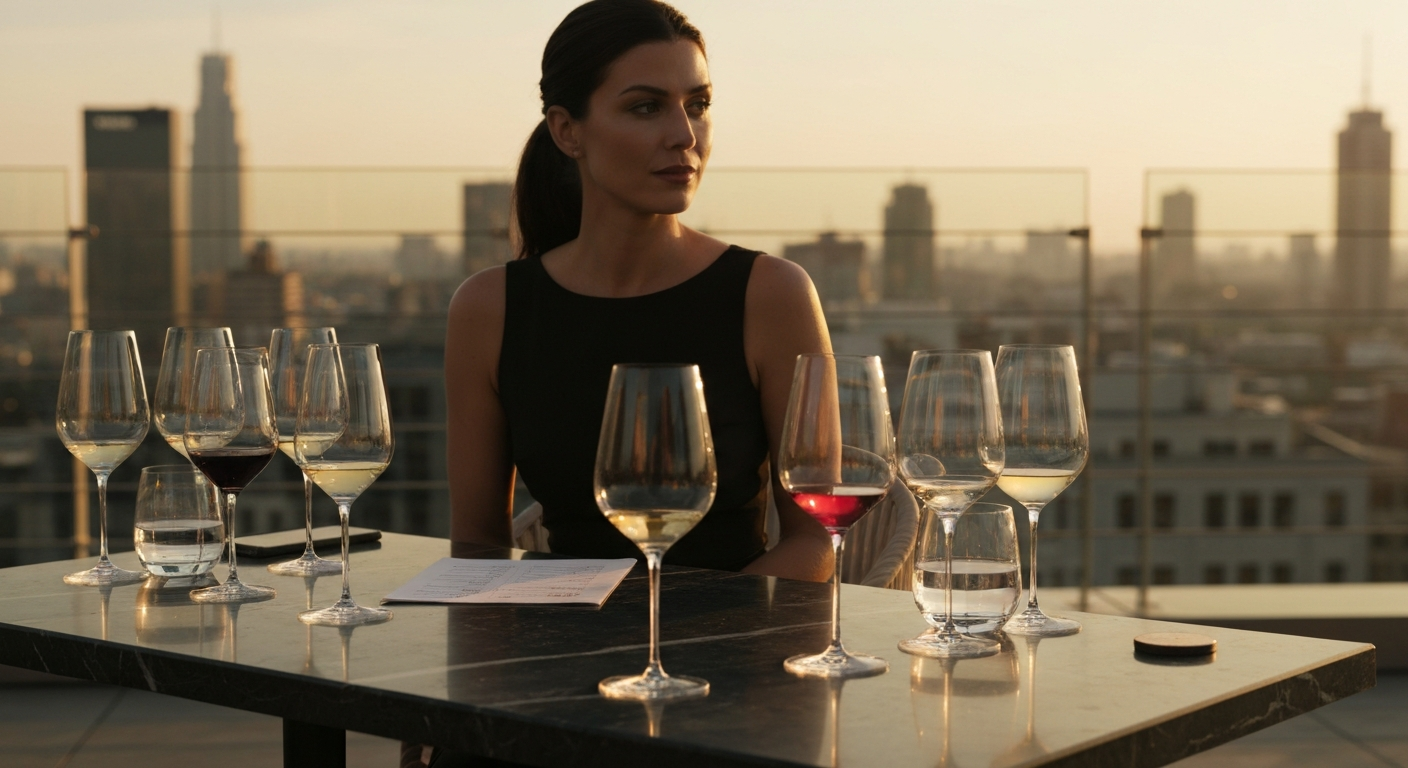
Theory is nice, but how do you put it into practice? Here are the concrete steps that worked for me:
- Attend a structured wine tasting every month (budget: $40-80). In Hamburg I recommend tastings at Jacques' Wein-Depot or at smaller wine merchants like Vom Fass on Neuer Wall. Avoid events with more than 12 participants; they're too big for real learning.
- Invest in a wine notebook (I use the Moleskine Wine Journal, $18). After every tasting, note at least 3 concrete aroma impressions and a personal rating. After 10 entries you'll see patterns in your preferences.
- Choose the wine yourself at your next restaurant visit. Not just anything: read the list, ask the sommelier a question, make an informed decision. This small act is a confidence booster in miniature.
- Form a small tasting group (3-4 people). We've been meeting every second Saturday for 9 months, and everyone brings a bottle (price limit: $25). Cost per person per evening: under $10, learning effect: priceless.
According to the German Wine Institute, Germans spend an average of $4.80 per bottle of wine (German Wine Institute, Market Report 2023). For learning purposes I recommend double that, not out of snobbery, but because cheap wines are often industrially produced and lack aromatic variety. From $10 up you'll find wines with a clear character that are suitable for learning.
Stumbling Blocks Along the Way: What Didn't Work
Honesty is part of it: not everything went smoothly. My first attempt to philosophize about terroir on a date ended embarrassingly. I confused "minerality" with actual minerals and ended up talking about rocks in the wine. He corrected me politely, but I felt like an impostor.
I learned: you don't show wine knowledge through monologues, but through thoughtful questions. "Which region are you into right now?" is better than "Did you know Chablis is actually Chardonnay?" Nobody likes a know-it-all, even when they're right.
Another mistake: at first I only booked expensive tastings ($100+), because I thought more money meant more learning. Wrong. The most informative session I had was at a $35 beginner seminar at the VHS Hamburg (adult education center). The instructor, Markus Berger, took 20 minutes to answer my questions about acidity structure, which would never have happened at a luxury event.
The Transfer: From the Wine Glass Into Life
The biggest surprise was how much personal growth through wine tasting carried over into other areas of life. I became more patient: you can't rush wine, some bottles need air, some need time in the glass. I became more tolerant of different opinions: one person loves acidity, another sweetness, both are legitimate. And I became braver about trying things: the worst case is a sip you don't like, not the end of the world.
That attitude helped me in situations far beyond wine tastings. In the next difficult conversation about expectations in an arrangement, I could calmly and precisely state what I wanted and what I didn't, skills I had trained while describing wine aromas. Just as my first arrangement at a gallery opening showed me that cultural interest creates real connections, wine culture showed me that expertise nourishes self-confidence.
Wine Knowledge and Lifestyle Dating: A Natural Connection
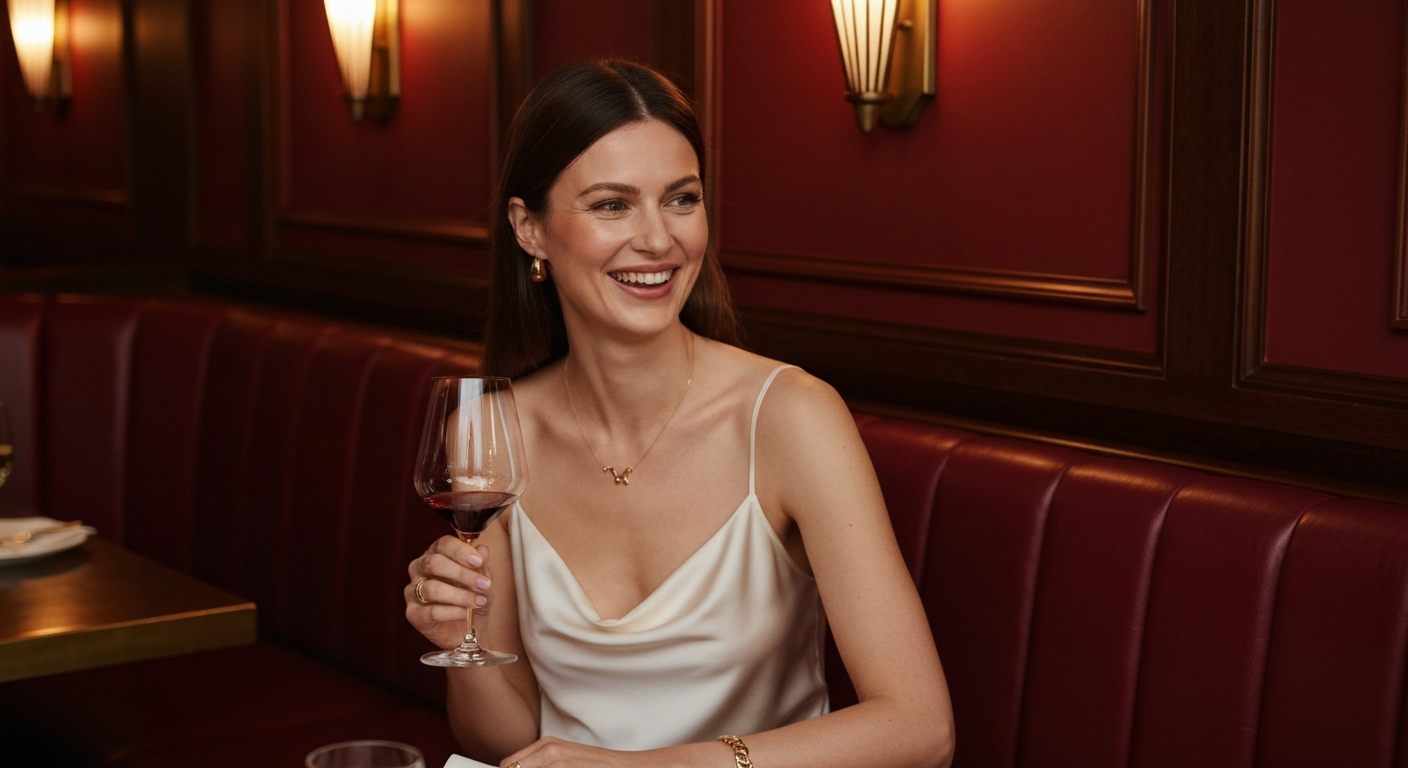
In lifestyle dating, the ability to enjoy plays a central role. Many successful men value partners who bring more than a pretty smile, namely real interest in culture and the art of living. Wine knowledge isn't a mandatory requirement there, but it is a door-opener for deeper conversations.
On platforms like MySugardaddy I've found that men who mention wine trips or gourmet experiences in their profile are often looking for partners who can share those interests. A profile in which I mentioned my passion for wine culture led to 40% more messages, and to higher-quality conversations than before.
That's no coincidence. Someone who can talk about wine signals: I'm ready to learn, I value quality, I invest in myself. Exactly the values that are appreciated in lifestyle dating.
Frequently Asked Questions About Wine Tastings and Confidence
How can wine tastings build confidence?
Wine tastings build confidence through three mechanisms: first, by building expertise that gives you security in social situations; second, by training perception, which carries over into more precise communication; third, through the experience of community without hierarchy, where learning matters more than perfection. In my case, 14 tastings in 18 months led to measurable changes in my presence: I could join conversations with more self-assurance and put my opinion more clearly.
Which wine tasting in Hamburg is suitable for beginners?
For beginners I recommend introductory seminars at the VHS Hamburg (about $35 for 2.5 hours) or at Jacques' Wein-Depot (monthly tastings from $25). These events are explicitly designed for people with no prior knowledge and create a relaxed learning atmosphere. Avoid big trade-fair events as a starting point; they're often too hectic and too loud for real learning. Small groups of at most 10-12 participants are ideal.
How much should I invest in wine education each month?
A realistic budget is $60-100 a month: one structured wine tasting ($40-60) plus two to three bottles for self-study ($10-15 each). That sounds like a lot, but it's less than many spend on gym memberships, and the return on investment in the form of confidence and social skills is enormous. After a year you'll notice a clear difference in your presence.
Do I have to like wine to benefit from tastings?
No, you don't have to be a wine fan, but you should be open to the experience. At the beginning I only knew Prosecco and rosé; everything else seemed too "complicated" to me. Since then I've learned that it isn't about loving everything, but about perceiving and naming differences. Even if you only like 3 out of 10 wines tasted, you've learned something about your preferences, and that is exactly the point.
How do I transfer wine knowledge to other areas of life?
The skills you train at wine tastings, precise perception, nuanced language, patience, openness to new experiences, can be used universally. I now use the same technique I use for describing wine aromas to state my position clearly in difficult conversations. The art of naming subtle differences helps me communicate needs more precisely. And tolerance for different tastes has made me more open and less judgmental in general.
My Conclusion: Confidence Grows in Small Sips
Wine tasting and confidence isn't a concept from a motivational book, but a practical experience that has changed my life. After almost two years of regularly attending wine tastings, I'm not only more knowledgeable about wine, I'm more self-assured overall. I trust myself more, I communicate more clearly, I appreciate quality, in wines and in relationships.
The path began with $45 for a tasting on the Elbchaussee and led to a fundamentally changed self-image. Experiencing wine culture today means to me: enjoying more consciously, perceiving more precisely, deciding more boldly. And yes, it makes a real difference in lifestyle dating too when you don't just look good but also have something to say, especially when you say it with the precision and self-assurance of someone who knows what she's talking about.
If you're wondering whether wine tastings are for you: try it. Just one session. If you feel nothing afterwards, you've invested $50 and an evening. But if it goes the way it did for me, you've just taken the first sip on a path that reaches far beyond the wine glass.