Champagne Pairing: A Lesson in Self-Worth
Reading time: 10 minutes
I was standing in the vaulted cellar of a champagne house in Hamburg's Speicherstadt, six glasses of different champagnes in front of me, artfully arranged canapés beside them. The sommelier was explaining the differences between Blanc de Blancs and Blanc de Noirs. I had no idea. But that was exactly what was about to change at this champagne tasting, and in a way that went far beyond flavor and bubbles.
What began as pleasant company at an event for my partner at the time turned into a series of experiences that fundamentally changed how I saw my own worth. Through champagne pairing, I learned not only what 24 months of aging on the lees means, but also that I deserve to understand things rather than just be there.
My First Champagne Tasting: Overwhelm Meets Curiosity
The first time, I sat at a private champagne tasting at Le Ciel in Hamburg-Pöseldorf. Eight people, three courses, five champagnes. The wine shop Weinhandlung Jacques' had organized the event, and each bottle cost between $95 and $260. I felt completely out of place. The other guests discussed dosage and terroir while I nodded and tried to make myself invisible.
The breakthrough came with the third champagne, a Pol Roger Brut Réserve. The sommelier asked us not just to drink but to describe. I ventured: "Tastes like green apple and... brioche?" He smiled. "Exactly. That comes from autolysis during the aging on the lees." Suddenly my perception had a name, and my words had weight. I wasn't just decoration; I could contribute.
Over the following weeks, I attended three more champagne tastings. One of them was at Haerlin in the Hotel Vier Jahreszeiten, where I experienced a champagne pairing with a four-course menu for the first time. Cost: $310 per person. According to a survey by the Hamburg Chamber of Commerce, Hamburg households with a net income above €5,000 a month spent an average of €612 on upscale dining experiences in 2023 (source: IHK Hamburg). This world was real, and I learned to move in it.
What Champagne Pairing Really Means
Champagne pairing isn't magic. It's about combining the characteristics of a champagne with those of a dish so that each enhances the other. A dry Brut Nature with high acidity cuts through rich components like salmon or crème fraîche. A semi-dry Demi-Sec goes well with desserts because its residual sugar doesn't compete with the sweetness of the dish but complements it.
At a tasting at the wine shop Weinhandlung Kreis on Neuer Wall, I learned the basic rule: light dishes call for light champagnes (Blanc de Blancs), hearty dishes for fuller-bodied ones (Blanc de Noirs or Rosé). It sounds simple, but the nuances are endless. A salty dish like oysters brings out the minerality of a Chablis-style champagne. A tart dish like goat cheese with apricot compote needs a champagne with low dosage, otherwise it becomes too sweet.
I began to internalize these principles. Not because I wanted to become an expert, but because I understood that whoever speaks the language gets heard. At a dinner at the Jahreszeiten Grill, I commented on the pairing of Louis Roederer Cristal with scallops, and the host, an influential entrepreneur from the energy sector, listened to me. Not as a charming companion, but as a conversation partner.
The Technique Behind Exclusive Tastings
At a two-day champagne workshop at the Hotel Louis C. Jacob in Nienstedten, I learned that professionals analyze champagne in five steps: sight (color, bubble formation), smell (first aromas, second aromas after swirling), taste (attack, mid-palate, finish), texture (creaminess of the bubbles) and overall impression. Cost of the two-day workshop: $975, including six bottles to take home.
The investment was absurdly high. But it was my decision. Not my partner's, not his generosity. I paid out of the money I had set aside through smart financial planning, a topic I write about in more detail in my article on building wealth. That $975 was my statement: I invest in myself because I'm worth it.
Self-Worth Through Culinary Knowledge
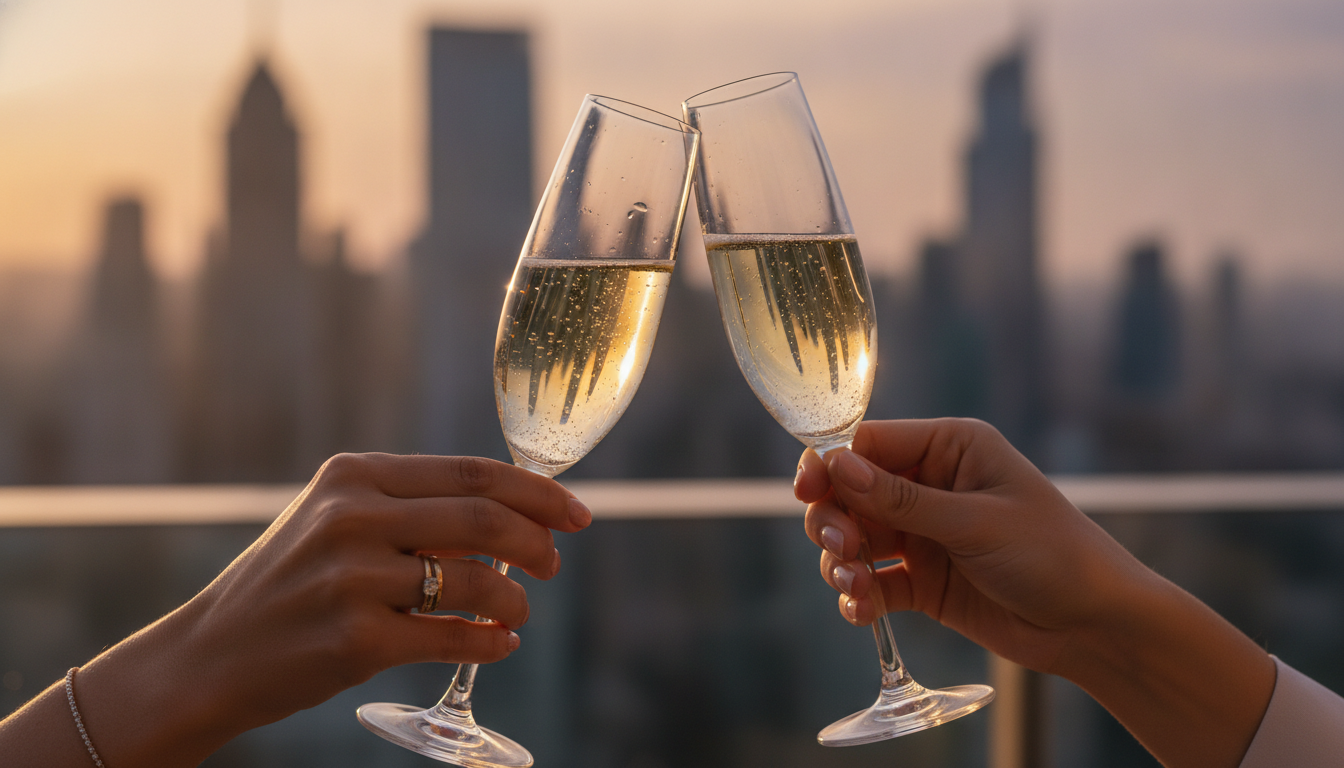
What does champagne pairing have to do with self-worth? Everything. In a world where I was often seen as a "plus one," expertise gave me a voice and presence. I was no longer the woman who got brought along. I was the woman with an informed opinion on Ruinart Blanc de Blancs.
According to a 2024 study by the German market research institute GfK, 68 percent of women between 25 and 35 say that specialized knowledge in upscale lifestyle areas strengthens their confidence in social situations (source: GfK Consumer Confidence Study). I was one of those 68 percent, and knowing about champagne was my tool.
At a private dinner in a villa in Blankenese, the host served a 2012 vintage Dom Pérignon with a dish featuring black truffle. I mentioned in passing that the earthy notes of the truffle would be wonderfully complemented by the yeasty, nutty aromas of the Dom Pérignon. The host, a well-known Hamburg shipping magnate, said: "That's just what I thought. Nice that you noticed." It was a moment of equality, not hierarchy.
Food Pairing Hamburg: Where I Learned and Grew
Hamburg offers an impressive food pairing scene. Besides the locations already mentioned, I attended tastings at the Weinakademie Hamburg in Eppendorf, at Mutterland on Jungfernstieg and at the Champagner-Salon in the Buddenbrookhaus. Each location had its own style, but all shared the same philosophy: education, not consumption.
At the Weinakademie Hamburg, an evening tasting with four champagnes and accompanying cheese cost $135. At Mutterland, the focus was on regional products combined with French champagnes, which led to unusual pairings, such as Sylt oysters with Billecart-Salmon Brut Réserve. This variety taught me flexibility and openness, not only when it comes to taste but also in dealing with new situations.
The Parallel to Other Areas of Life
The lessons I learned at champagne tastings were never just about wine. They were about respect, being on equal footing and the ability to form and defend my own opinion. I had similar experiences on winery visits, where I learned that expertise commands respect, or in cooking classes with star chefs, which showed me that I can accomplish something with my own hands.
Champagne pairing was never isolated. It was part of a larger process in which I went from a passive companion to an active shaper of my own life. Every tasting, every discussion about the minerality of a Cramant or the fruitiness of an Aÿ was a step toward self-determination.
What I Concretely Learned at Exclusive Champagne Experiences
Here are the most important practical lessons I took away, which still help me today:
- Blanc de Blancs (100 percent Chardonnay) goes with light fish dishes, seafood and goat cheese, which I tried at a tasting at Haerlin with turbot and beurre blanc.
- Blanc de Noirs (100 percent Pinot Noir or Meunier) goes well with red meat, grilled vegetables and robust cheeses, which I experienced at a private dinner with duck breast and morels.
- Rosé champagne suits desserts with red fruit or salty appetizers like serrano ham, which I discovered at a tasting at Weinhandlung Kreis with strawberry tart.
- Pay attention to dosage: Brut Nature (0-3 g/l sugar) is ideal with salty, rich dishes; Demi-Sec (32-50 g/l) with desserts, which I learned in the two-day workshop at the Louis C. Jacob.
- Temperature matters: 46-50 degrees Fahrenheit (8-10 degrees Celsius) for young champagnes, 50-54 degrees (10-12 degrees Celsius) for mature vintage champagnes, a detail that completely changes the taste.
How Champagne Tastings Strengthened My Self-Worth
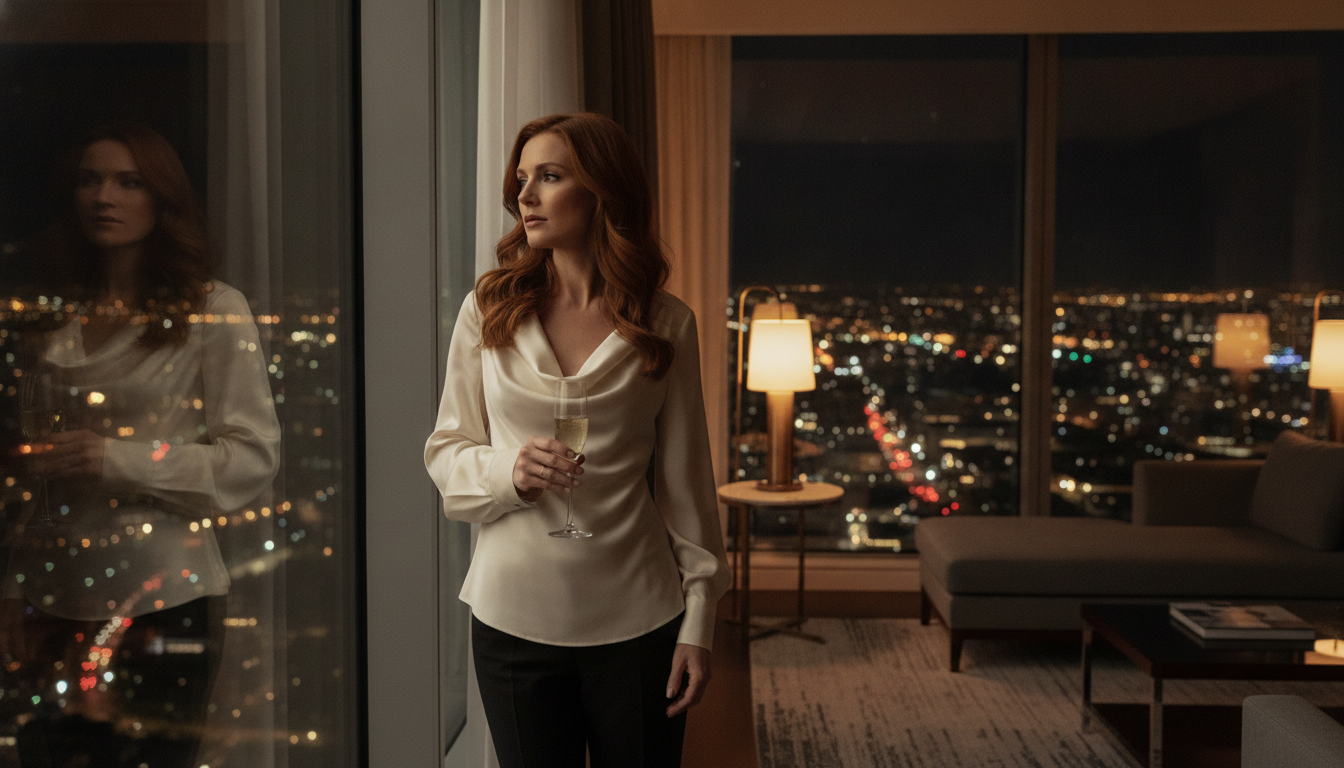
The moment I truly understood what these experiences meant to me came at a reception at the Museum für Kunst und Gewerbe. I stood with a glass of 2011 Taittinger Comtes de Champagne Blanc de Blancs in my hand, discussing the connection between art and enjoyment with a gallery owner. He asked for my opinion on the champagne. I described the lemony freshness, the creamy texture and the long, mineral finish. He nodded approvingly and said: "You have a good sense for this."
It wasn't the compliment that mattered. It was the fact that I had earned it. Not through my looks, not through my partner, but through my expertise. I had worked for this knowledge, hour after hour, tasting after tasting. And that knowledge was mine, regardless of outside circumstances.
According to a 2023 study by Ludwig-Maximilians-Universität in Munich, people's self-esteem rises significantly when they develop competence in a new field of knowledge, especially in areas that bring social recognition. Champagne expertise fell exactly into this category. I experienced this boost in self-esteem not in the abstract, but concretely at every event where I could join the conversation.
Setting Boundaries Through Knowledge
An underrated aspect: knowledge helps you set boundaries. At a dinner in a private club in Harvestehude, the host served a Moët & Chandon Impérial Brut with a heavily spiced Asian dish. I said, kindly but firmly: "I'm afraid that doesn't work. The heat drowns out the finesse of the champagne; a Gewürztraminer or an off-dry Riesling would be better." Silence. Then agreement.
I hadn't just voiced an opinion, I had marked a boundary: I don't accept what isn't right, not even out of politeness. This ability to set boundaries began with champagne pairings and ran through all areas of my life, including travel, as I describe in my article on travel etiquette.
Frequently Asked Questions About Champagne Tastings and Self-Worth
How much does an exclusive champagne tasting in Hamburg cost?
A high-quality champagne tasting in Hamburg costs between $135 for an evening class with four champagnes and $975 for a two-day workshop with personal guidance and six bottles to take home. Private tastings at restaurants like Haerlin or Le Ciel run about $275 to $385 per person, depending on the menu and the champagne selection.
How can champagne pairing strengthen self-worth?
Champagne pairing strengthens self-worth by building specialized knowledge that earns recognition and respect in upscale social situations. Someone who can speak knowledgeably about dosage, terroir and aromas is seen as a capable conversation partner, not just a companion. This expertise creates equal footing and makes it possible to confidently stand behind your own opinions.
Which champagnes are best for food pairing beginners?
For beginners, versatile Brut champagnes like Pol Roger Brut Réserve, Taittinger Brut Réserve or Billecart-Salmon Brut Réserve are a good choice. These champagnes have balanced acidity, moderate dosage and enough complexity to go with different dishes without dominating. They cost between $50 and $70 per bottle and are available at good wine shops in Hamburg.
Where can I find reputable champagne tastings in Hamburg?
Reputable champagne tastings in Hamburg are offered by the Weinakademie Hamburg in Eppendorf, Weinhandlung Jacques' in Winterhude, Weinhandlung Kreis on Neuer Wall and Mutterland on Jungfernstieg. Upscale restaurants like Haerlin at the Vier Jahreszeiten or Le Ciel in Pöseldorf also host private tastings regularly. Dates and prices can be found on the respective websites or through platforms like Eventbrite.
Can a sugar baby use champagne pairing to grow as well?
Absolutely. Champagne pairing is more than a culinary hobby; it's a form of self-education that builds social skills and self-esteem. For a sugar baby, it makes it possible to go from passive companion to active conversation partner, which in the long run also opens up financial independence and career opportunities. Investments in educational experiences like these pay off through greater confidence and expanded networks.
Conclusion: Champagne as a Catalyst for Self-Determination
Champagne tastings didn't turn me into a sommelier. But they showed me that I can learn, grow and hold my own. Every glass, every pairing, every discussion about bubbles and finish was proof that I'm more than the role that was assigned to me. For me, champagne became a symbol of self-worth: sparkling, complex and inimitable.
If you're wondering whether it's worth investing time and money in experiences like these: yes, it is. Not because of the champagne, but because of what you learn about yourself along the way. Sign up for a tasting, ask questions, form your own opinion. Because in the end, it's never just about the champagne. It's about knowing what you're worth.