Collecting Art Shaped My Personal Style

Reading time: 9 minutes
Three years ago, I stood for the first time in the Galerie Maerzke on Budapester Straße in Berlin-Charlottenburg and didn't know what to do with my hands. The salesperson smiled professionally, I nodded at everything and understood nothing. Today 14 works hang in my apartment, each one deliberately chosen. Collecting art as a beginner doesn't mean having perfect taste right away; it means first understanding what you like and why.
This journey didn't begin out of a hunger for education but out of a situation in which I had to learn to find my way in a world that was foreign to me at first. I no longer wanted to just nod when someone talked about art. I wanted to develop my own opinion. What followed wasn't a straight path but a collection of bad purchases, surprising discoveries and valuable lessons about my own taste.
The First Gallery Visit Ever: Pure Overwhelm
My very first deliberate gallery visit was a disaster. I had picked the König Galerie in Berlin's Kreuzberg because it's housed in a converted church building and I thought that would be a good start. Wrong. The exhibition showed contemporary video art, and I didn't understand a single piece. After 20 minutes I was back outside, frustrated and convinced that collecting art wasn't for me.
What I didn't know then: nobody understands everything right away. According to a 2023 survey by the German Institute for Museum Research, 68 percent of first-time visitors to German galleries say they feel overwhelmed. So I was in good company. The mistake wasn't mine but lay in my expectation that I had to figure it all out immediately.
How Do I Start Collecting Art: My First Three Steps
After this flop, I changed my strategy radically. Instead of torturing myself with incomprehensible conceptual art, I started where I actually liked something. Three concrete steps helped me:
- I visited the Gemäldegalerie at the Kulturforum in Berlin and spent four hours there with nothing but the works of the Flemish masters, with no audio guide, no expectations, just looking.
- I deliberately went to smaller, specialized galleries in the Scheunenviertel, where the staff had time and I could ask questions without feeling stupid.
- I bought my first work for $420 from a young artist at a studio party at the Uferhallen in Wedding, because it moved me, not because it had investment potential.
That third point was decisive. Buying art as a beginner means trusting your gut, even when you don't yet know anything about technique, art history or market value. That first picture still hangs above my desk today. It isn't technically perfect and will never rise in value, but it was the starting point of my collection.
Developing Your Own Art Style Through Mistakes
After that first purchase, several missteps followed. I bought a print because its colors matched the couch. I acquired a sculpture because it was trending. Both works ended up in the basement after six months. What I learned from that: your own art style doesn't develop through trends or interior logic but through elimination.
I started keeping a simple notebook. After every gallery visit I wrote down what had moved me and what hadn't. After about 30 visits spread over a year, a clear pattern emerged: I liked figurative painting with surreal elements, preferably in muted tones. Abstract art left me cold unless it had a clear emotional charge. Photography hardly interested me.
This self-knowledge was gold. Suddenly I could choose galleries and exhibitions deliberately. I no longer wasted time on art movements that gave me nothing. My focus sharpened. Much like I learned through champagne tastings what makes up my personal taste, conscious observation in galleries helped me calibrate my aesthetic compass.
Tips for Buying Art: What I'd Do Differently Today
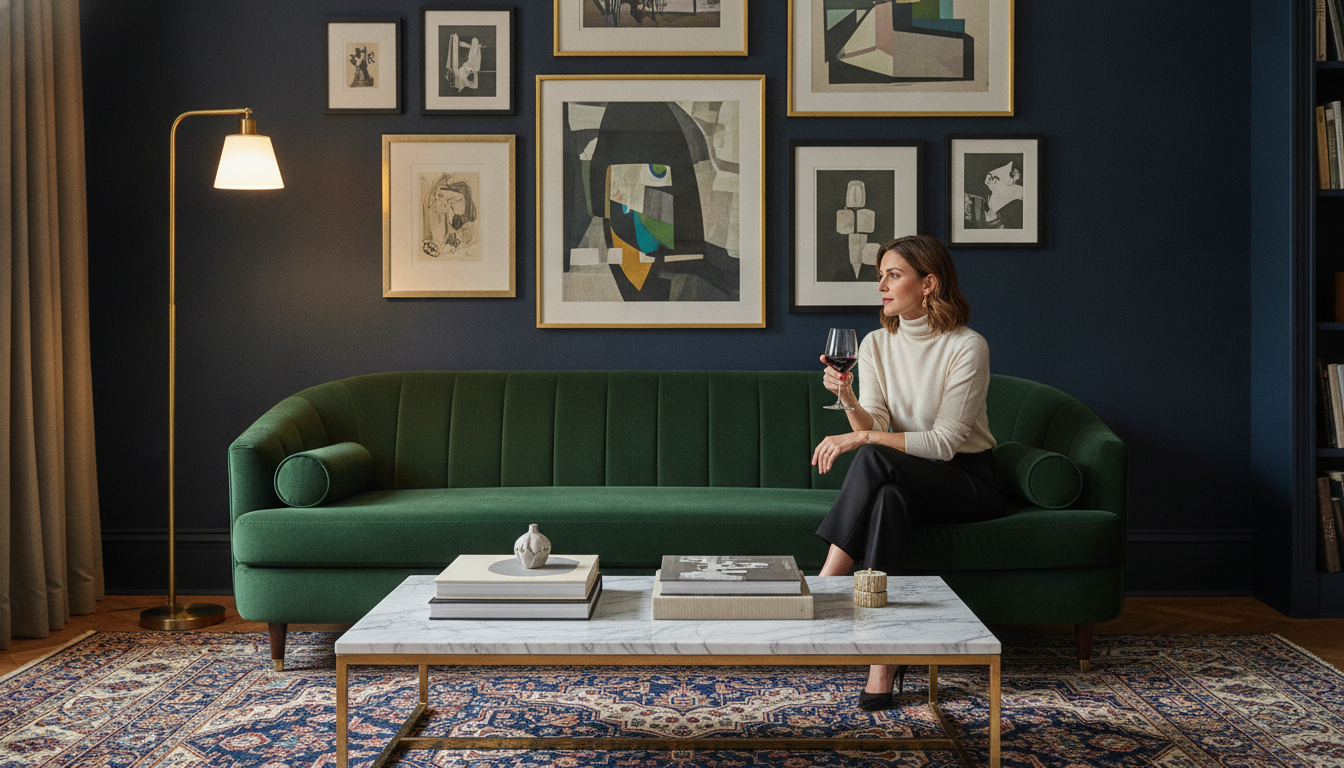
If I had to give someone advice today on collecting art as a beginner, it would be these five things:
First: only buy what you yourself want to see every day, not what might impress others. My most expensive mistake was a work for $1,300 that I bought because the artist was being hyped at the time. It hung for three months, then it annoyed me.
Second: use open studio days and tours like 48 Stunden Neukölln or the open studio day in Munich. There you meet artists in person, can ask questions and often get works directly at fair prices.
Third: ignore the art market completely as long as you're not collecting with five-figure amounts. For entry-level purchases up to $3,300, appreciation is irrelevant. Buy what moves you.
Fourth: keep educating yourself. After a year I subscribed to the art magazine Monopol and began reading artist biographies. That helped me place works in context without overthinking them intellectually.
Fifth: don't shy away from art advisory, but choose it critically. I had two conversations with an independent advisor who helped me structure my collection. She cost me $165 an hour, but I learned more than in the 20 gallery visits before.
From Uncertainty to Clarity
The moment I realized my taste had really developed came as a surprise. I was standing in the Galerie Neugerriemschneider in Berlin-Mitte in front of a work by Olafur Eliasson, and for the first time I could say precisely why it didn't speak to me: the light installation was technically brilliant but emotionally cold; it played more with effect than with feeling. Three years earlier I would simply have nodded and felt uneducated. Now I had an informed opinion.
This development didn't happen overnight. According to a 2022 study by the University of Vienna, collectors need an average of 18 to 24 months of intensive engagement with art to develop a stable personal taste. For me it was almost two years, in which I visited at least two galleries a month and bought four works.
What helped me was the insight that collecting art doesn't have to be a status symbol. Much like I learned with my first arrangement that authenticity counts for more than a perfect appearance, I understood the same in the art world: it's okay not to like everything. It's okay to ignore popular artists. It's okay to develop a taste that doesn't follow the mainstream.
My Collection Today: Four Works That Shape Me
Of my 14 works, I'd like to highlight four because they show my path by example. The first is that $420 picture from Wedding, technically simple, emotionally honest. The second is an oil painting by Julia Haenni, bought in 2022 for $2,650 at the Galerie Deschler in Berlin, surreal figuration in earth tones, exactly my style. The third is a small sculpture by an unknown artist that I found at a flea market in Prenzlauer Berg for $65, simply because it fit my concept perfectly. The fourth is a print by Cornelia Schleime that I treated myself to in 2023 for $935, my first work by an established artist.
These four works don't tell a linear story, but they show how my taste developed from diffuse to clear. Today I no longer buy impulsively. I wait, visit a work several times, think about whether it fits my collection. This conscious process is the result of three years of active learning.
Gallery Visits as a Regular Practice
Today gallery visits are part of my fixed rhythm. On the first Saturday of every month, I set aside three hours for new exhibitions. I have a list of eight galleries in Berlin that regularly show artists I'm interested in. I subscribe to newsletters and follow galleries on Instagram, but I no longer let myself be rushed. If an exhibition doesn't fit, I simply don't go.
I fought for this self-determination. In the beginning I felt obliged to attend every opening, to follow every hype. That only led to overwhelm. Today I know: my own art style is more important than FOMO. Just as I learned to be selective at business events, the same applies to art.
Art Advisory: When It Makes Sense
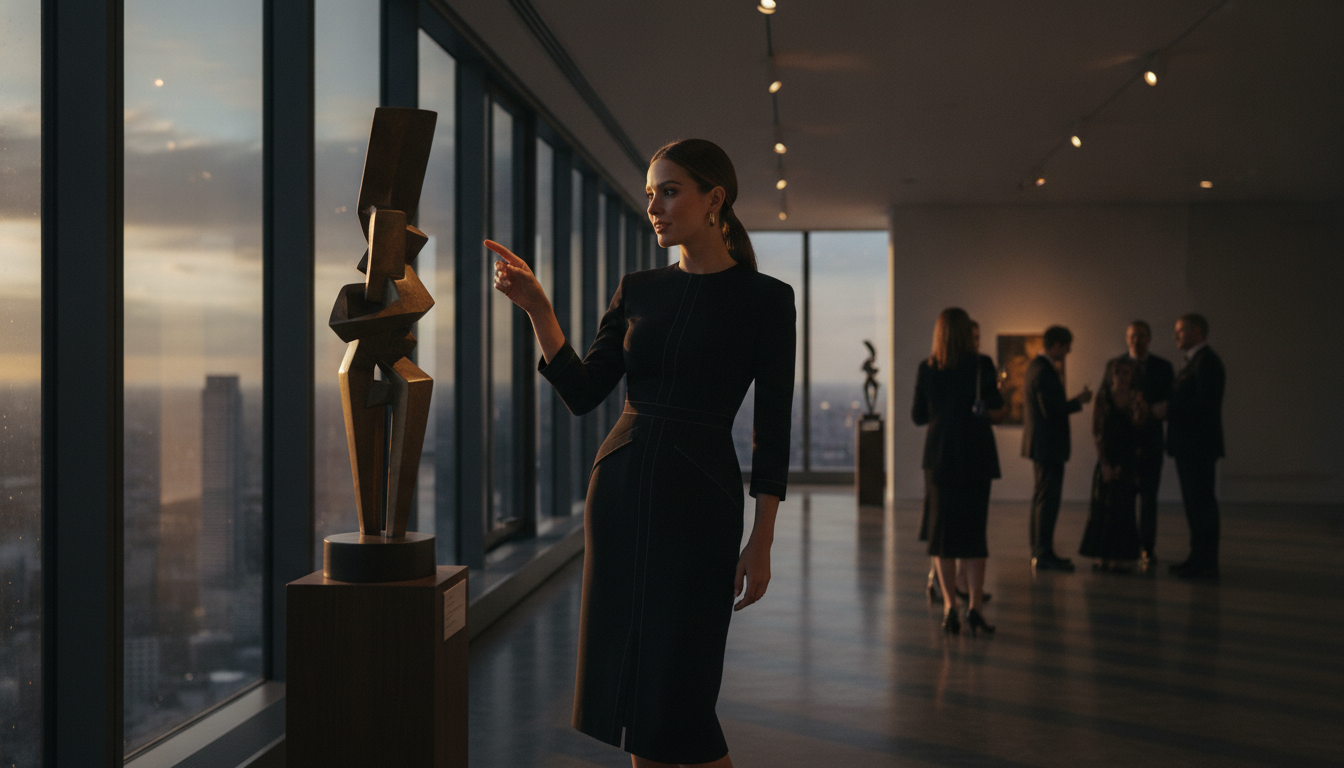
I had a total of three appointments with a professional art advisor, twice in the first year and once after two years. The first appointment was orientation: what directions are there, where do I find what, how does the market work. The second was fine-tuning: how do I develop a coherent collection, what should I look out for. The third was a portfolio analysis: does everything fit together, where are the gaps, what should I look for next.
This advice cost me $660 in total, but it shortened my learning process considerably. What mattered: I chose an independent advisor who wasn't tied to galleries. Many galleries offer free advice, but of course it's driven by their own interests. I wanted neutral expertise.
What Collecting Art Has to Do With Self-Development
Looking back, collecting art as a beginner was more than just a new hobby. It was a process of self-discovery. I had to learn to trust my own judgment, even when others disagreed. I had to accept that my taste doesn't have to be perfect but can simply be mine. I had to develop patience and understand that collecting is a marathon, not a sprint.
These lessons carried over to other areas of my life. I became more confident in my decisions, clearer in my preferences, more patient in the process. Collecting art taught me that expertise doesn't emerge overnight but through consistent engagement over time.
Frequently Asked Questions About Collecting Art as a Beginner
How do I start collecting art without much money?
Start with prints, small formats or young artists whose works cost between $220 and $880. Visit open studio days, graduate shows at art schools or online platforms like Artsy. More important than the budget is engaging with art regularly to develop your taste.
Do I need to have studied art history to collect art?
No, not at all. I have no formal art training and still collect successfully according to my own taste. What matters is the willingness to read up, visit exhibitions and ask questions. Expertise helps, but emotional resonance is more decisive.
How do I know whether an artwork really suits me?
Imagine the work hanging in your home for ten years. Will you enjoy it every day, or will it eventually get on your nerves? I use the three-visit rule: if I visit a work three times in the gallery and it moves me every time, I buy it. If not, I let it go.
Should I consider art an investment?
Only if you're prepared to invest six-figure sums and engage intensively with the art market. For beginning collectors, art isn't a sensible financial investment. Buy what you like, not what might hold its value. The joy of the work is the real return.
How often should I visit galleries to develop my taste?
I recommend at least two visits a month over a period of a year. That's enough to recognize patterns in your preferences without overwhelming you. More important than quantity is conscious reflection: what do I like, what don't I, and why?
Conclusion: Collecting Art Is a Mirror of Your Development
My collection isn't perfect, isn't valuable in a financial sense, but it is authentically mine. Every work tells of a moment when I came a little closer to my taste. Collecting art as a beginner isn't a project with a clear endpoint but an ongoing process of refinement.
If you're thinking about starting yourself: do it. Find a gallery in your city, go without expectations, let the works work on you. Don't buy anything on the first visit, but come back. Keep a notebook, reflect on what moves you. And be patient with yourself. Your own art style will develop, I promise.
The 14 works on my walls are more than decoration. They are a visual biography of my last three years, a record of my learning curve, proof that I've learned to trust myself. And in the end, that's the biggest gain from this whole process.